More Than a Pet

How pets support healthy aging—and why researchers are paying attention.

Every morning begins the same way.

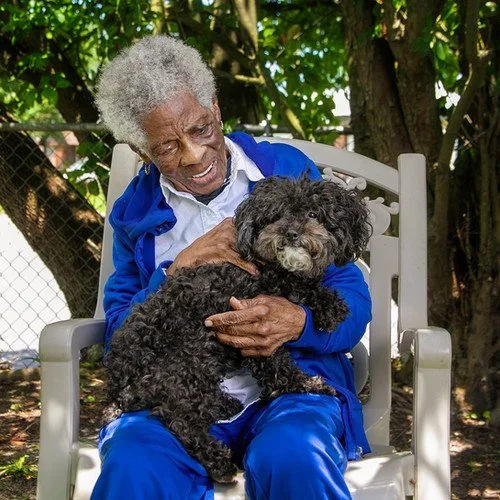
Before Agnes finishes her first cup of coffee, Sadie is already watching her. If Agnes gets up, Sadie gets up. If Agnes settles into her favorite chair, the little black Maltese-Poodle mix curls up nearby. Neither seems especially concerned with where they're going. They simply prefer getting there together.

At 101 years old, Agnes has learned to appreciate routines like these. Five years ago, after losing her son, life became much quieter.

Then came Sadie.

"She never leaves my side," Agnes says. "Sometimes she knows when I feel bad before I do."

For Agnes, Sadie is more than a pet. She's part of the rhythm of each day.

As it turns out, science suggests that relationship may be more important than many people realize


The Hidden Health Risk We Don't Always See

When most people think about healthy aging, they think about eating well, exercising, staying mentally active, and managing chronic health conditions.

Those things matter.

But public health experts say there's another factor that deserves just as much attention: social isolation. In 2023, U.S. Surgeon General Dr. Vivek Murthy declared loneliness and social isolation a public health epidemic. His advisory concluded that prolonged social isolation increases the risk of heart disease, stroke, depression, anxiety, cognitive decline, dementia, and premature death. In fact, the health risks associated with chronic social isolation are comparable to smoking up to 15 cigarettes a day.

It's a startling comparison, but one that has changed the way many experts think about healthy aging.

As we grow older, our social circles often become smaller. Retirement changes daily routines. Adult children move away. Friends and spouses pass away. Health challenges may make driving or participating in community activities more difficult. Opportunities for everyday interaction gradually begin to disappear.

That's why researchers increasingly recognize that maintaining meaningful social connections is just as important to healthy aging as staying physically active or eating well.


Where Pets Fit Into the Picture

For decades, researchers focused on nutrition, exercise, and medical care as the cornerstones of healthy aging.

Today they're paying closer attention to something less obvious.

Relationships.

Not just relationships with family and friends, but relationships that provide routine, responsibility, companionship, and purpose.

Increasingly, pets are part of that conversation.

A national poll conducted by the University of Michigan's Institute for Healthcare Policy and Innovation found that:

  • 88% of older pet owners said their pet helps them enjoy life.

  • 86% said their pet helps them feel loved,

  • And nearly three out of four said their pet gives them a sense of purpose. Older adults who lived alone reported even greater emotional benefits.

Research has also found that pets can encourage regular physical activity, establish daily routines, reduce stress, create opportunities for social interaction, and help reduce feelings of loneliness.

Researchers are careful not to suggest that pets replace human relationships. They don't.

Instead, they become one important part of the network of relationships that helps people remain connected and engaged.


More Than Companionship

Perhaps the most interesting benefit isn't companionship at all.

It's purpose.

After spending decades raising children, building careers, caring for loved ones, volunteering, and contributing to their communities, many older adults eventually find themselves in a season of life where fewer people depend on them.

A pet changes that.

Someone still needs breakfast.

Someone still needs a walk.

Someone still needs care.

Those simple responsibilities create structure, encourage movement, and provide a reason to begin each day. Researchers increasingly believe that having a sense of purpose contributes to both emotional and physical well-being, particularly later in life.


Agnes and Sadie

When Agnes talks about Sadie, she doesn't mention research.

She simply smiles.

"She never leaves my side."

It's a short sentence. But it says everything.

Sadie doesn't replace the family Agnes has loved throughout her life, nor does she erase grief.

What she does provide is companionship during quiet moments, a familiar routine that gives shape to each day, and the comforting knowledge that Agnes isn't facing those days alone.

Sometimes, the simplest relationships have the greatest impact.


Putting Research Into Practice

At Senior Citizens Inc., we've seen stories like Agnes's time and time again.

We've also seen another reality.

Many Meals on Wheels clients live on fixed incomes. After paying for housing, medications, groceries, and utilities, caring for a beloved companion animal can become another financial challenge.

That's why Senior Citizens Inc. created the Meals on Wheels Pet Program. By helping eligible Meals on Wheels clients provide food for their companion animals, the program helps preserve relationships that contribute to companionship, routine, purpose, and emotional well-being.

The research tells us why these relationships matter.

The people we serve remind us what they look like in everyday life.


How You Can Help

Senior Citizens Inc.'s Meals on Wheels Pet Program relies on the generosity of our community to help eligible older adults continue caring for the companion animals that enrich their lives.

You can support the program by:

  • Donating unopened dog or cat food

  • Making a financial gift designated for the Meals on Wheels Pet Program

  • Hosting a community pet food drive

  • Becoming a monthly supporter

Together, we can help older adults continue caring for the companions who bring comfort, purpose, and connection to their lives.